Loading...
Why Self-Care Isn’t Selfish: Evidence-Based Ways to Practice It Daily
Published on: January 2026
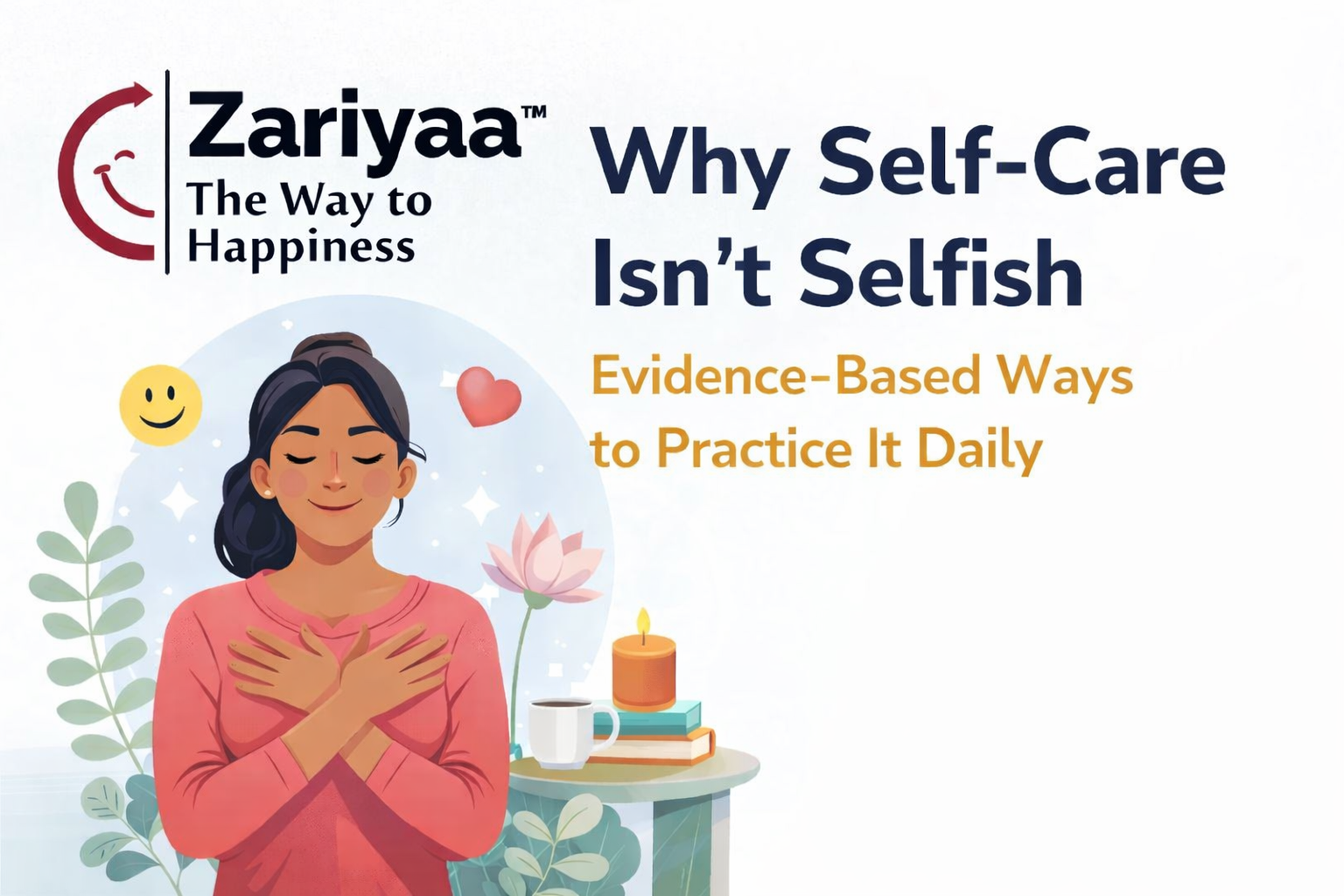
Somewhere along the way, self-care got a bad reputation.
It started sounding indulgent. Optional. Even selfish. As if taking care of yourself means taking something away from others.
But here’s the truth we often forget: you cannot pour from an empty cup.
At Zariyaa, we see self-care not as an escape from responsibility, but as a way to stay present for life — your work, your relationships, and most importantly, yourself.
Let’s gently unpack why self-care isn’t selfish, and how you can practice it daily in ways that are grounded in science and kindness.
Self-Care Is a Nervous System Need, Not a Luxury
Modern life keeps our nervous systems constantly switched “on.”
Deadlines. Notifications. Expectations. Emotional labour. Over time, this chronic stress shows up as fatigue, irritability, brain fog, gut issues, and even emotional numbness.
Research shows that regular self-regulation practices — like rest, mindful movement, and emotional processing — help lower cortisol levels and improve resilience.
This is especially important when we confuse being productive with being well.
If you’ve ever wondered why rest feels uncomfortable, you may find insight in our blog on emotional states and mental health awareness → 👉 Sadness vs Depression: Understanding the Difference
Self-Care Helps You Show Up Better — Not Less
Self-care doesn’t make you less available. It makes you less depleted.
When your body and mind feel supported:
- You listen better
- You react less
- You make clearer decisions
- You feel more emotionally grounded
In fact, studies in workplace psychology show that people who prioritise recovery time are more focused and emotionally intelligent, not less committed.
If you’re struggling to find balance between inner calm and outer demands, you might resonate with → 👉 How to Find Inner Peace in a Chaotic World
Evidence-Based Ways to Practice Self-Care (That Actually Stick)
Self-care doesn’t have to mean long routines or perfect habits. It’s about small, repeatable acts of self-respect.
1. Regulate Before You Reflect
Before journaling or “fixing” your emotions, calm your body first.
- Take 5 slow breaths
- Place one hand on your chest
- Let your exhale be longer than your inhale
This tells your nervous system: you are safe.
2. Eat for Stability, Not Control
Self-care isn’t restriction — it’s nourishment.
Your gut and brain are deeply connected, and poor nutrition can amplify anxiety, low mood, and fatigue.
If this feels relevant, explore → 👉 The Impact of Gut Health on Mental Well-Being
3. Create One “Non-Negotiable” Pause Daily
Not an hour. Not a retreat. Just 10 minutes with no agenda.
Sit. Walk. Breathe. Look outside.
This tiny pause helps your system reset from constant stimulation.
You can also explore gentle mindfulness spaces like → 👉 What Is Zen Space? A Beginner’s Guide
4. Set Boundaries Without Explaining Yourself
Self-care often looks like saying:
- “Not today”
- “I need time”
- “I’ll get back to you”
Boundaries aren’t walls — they’re instructions for how to care for you.
5. Practice Emotional Hygiene
Just like physical hygiene, emotions need regular care.
Name what you feel. Write it down. Talk it out. Unprocessed emotions don’t disappear — they settle into the body.
Understanding patterns like overthinking or self-criticism can help → 👉 Cognitive Distortions: How Our Thoughts Shape Our Reality
Self-Care Is a Responsibility, Not a Reward
You don’t need to earn rest. You don’t need to justify care. You don’t need to hit burnout to slow down.
Self-care is how you stay connected to yourself in a world that constantly pulls you outward.
At Zariyaa, we believe well-being isn’t about doing more — it’s about listening better.
And sometimes, listening begins with asking a simple question:
What do I need right now?