Loading...
What Is a Zen Space? A Design Guide for Workplaces That Need to Breathe
Published on: April 2026
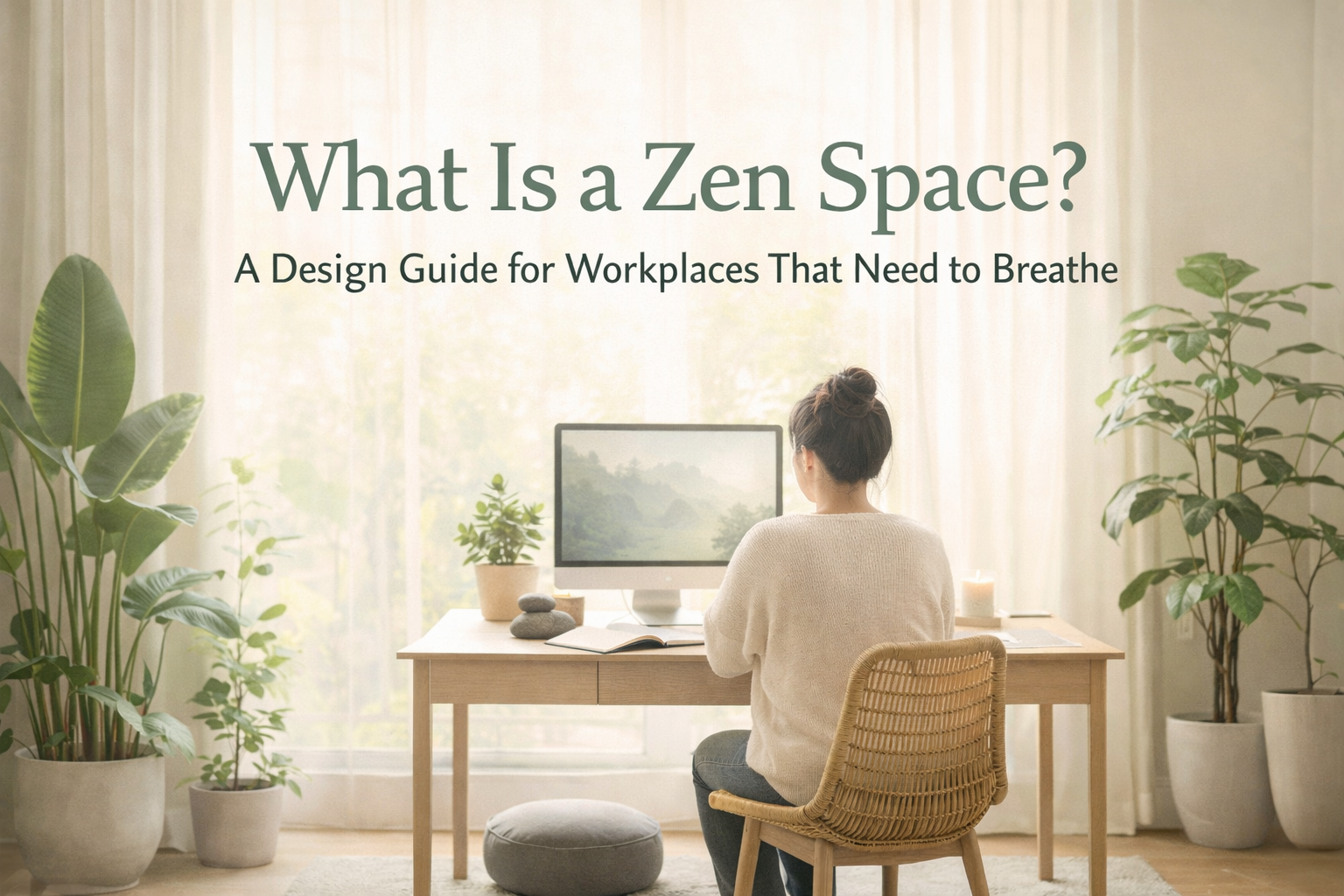
There’s a quiet shift happening in modern workplaces. Less noise. Fewer distractions. More intention.
Not because it looks good—but because people are exhausted.
A Zen space isn’t about aesthetics. It’s about creating an environment where the mind can slow down, reset, and return sharper. And companies that understand this are building teams that don’t just work more—they work better.
What Exactly Is a Zen Space?
A Zen space is a minimal, distraction-free environment designed to promote calm, clarity, and awareness.
It draws from Zen philosophy:
- Simplicity over excess
- Presence over pressure
- Stillness over stimulation
In a workplace, this translates into a dedicated area where employees can pause without guilt.
Think of it as the opposite of your Slack notifications.
Why Workplaces Actually Need It (Not Optional Anymore)
Let’s be direct:
- Constant context switching reduces productivity by up to 40%
- Burnout is now a top reason for attrition
- Employees don’t need perks—they need mental recovery
A Zen space solves for:
- Cognitive overload
- Emotional fatigue
- Decision burnout
If you’ve explored 👉 https://zariyaa.in/blogs/workplace-wellbeing/5-ways-to-balance-work-life-without-burning-out you already know—balance isn’t time management, it’s energy management.
Core Elements of a Functional Zen Space
1. Silence Is the Foundation
No calls. No laptops. No meetings.
If the space isn’t quiet, it’s not a Zen space. It’s just another room.
2. Minimal Design (Ruthlessly Minimal)
Remove:
- Clutter
- Bright colors
- Visual noise
Keep:
- Neutral tones (beige, white, soft greys)
- Clean surfaces
- Open space
This aligns with the same emotional clarity explored here: 👉 https://zariyaa.in/blogs/mindfulness/your-inner-critics-are-guests-not-masters-a-journal-challenge
3. Natural Elements (Non-Negotiable)
Bring in:
- Indoor plants
- Wooden textures
- Natural light
Even one plant can psychologically signal calm.
Artificial environments create artificial stress.
4. Comfortable, Grounded Seating
Avoid corporate furniture.
Use:
- Floor cushions
- Meditation mats
- Low seating
The goal isn’t posture—it’s presence.
5. Soft Lighting Only
Harsh white lights kill the experience instantly.
Use:
- Warm ambient lights
- Lamps instead of overhead panels
Light should feel like sunset, not interrogation.
6. Guided Mindfulness Tools
Most employees don’t know how to “switch off.”
Provide:
- Short meditation audio guides
- Breathing technique cards
- Journals
You can integrate practices from: 👉 https://zariyaa.in/blogs/morning-routines/the-hidden-rituals-highly-resilient-people-do-before-breakfast
Where Most Companies Get It Wrong
Let’s cut through it:
- They design for Instagram, not impact
- They over-decorate
- They don’t define usage rules
- They don’t integrate it into culture
Result? The room becomes a nap zone—or worse, stays empty.
How to Actually Make It Work
1. Set Clear Rules
- No devices (or silent mode only)
- 15–20 minute sessions
- Respect silence
2. Make Leadership Use It
If founders and managers don’t use it, no one will.
Culture follows behavior, not policy.
3. Integrate Into Workflow
- Encourage micro-breaks
- Add it to onboarding tours
- Normalize stepping away
4. Measure ROI
Track:
- Stress levels
- Productivity trends
- Retention
This is not a “soft” initiative. It directly impacts performance.
Final Thought
A Zen space is not about slowing people down. It’s about helping them return better.
Because the truth is simple:
You don’t need more working hours. You need better mental states during those hours.
And that’s exactly what a well-designed Zen space delivers.