Loading...
The Science of Happiness: What Neuroscience Says About Feeling ‘Good’ Every Day
Published on: February 2026
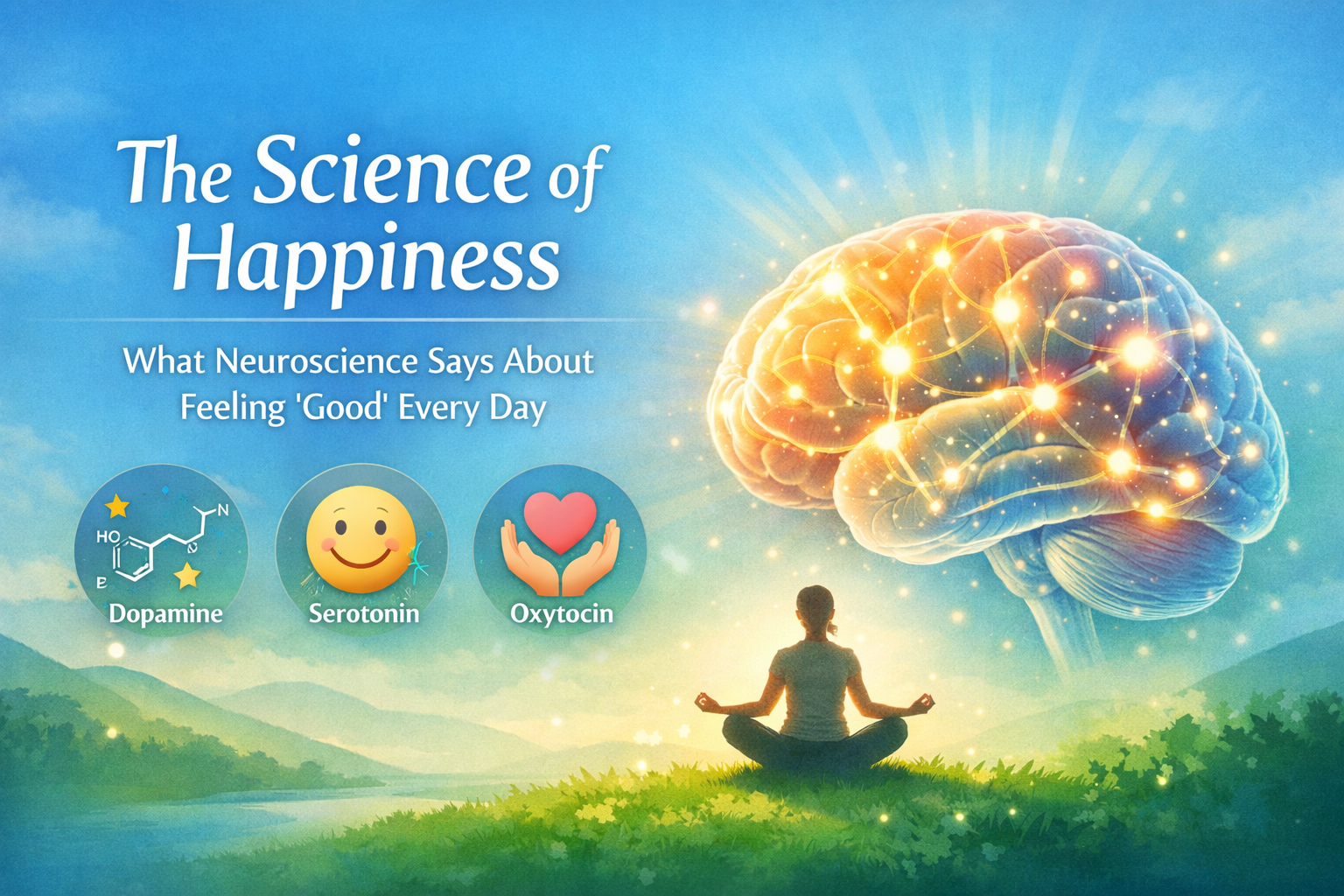
At Zariyaa – The Way to Happiness, we combine soulful insights with scientific clarity to help you build emotional wellbeing that lasts. This article unravels key neuroscience principles of happiness and practical steps you can use today — not someday.
🧠 What Neuroscience Has Discovered About Happiness
Neuroscience studies the brain — how it fires, how it reacts, and how different chemicals influence our mood. Here’s what science has uncovered about happiness:
1. Happiness Is Chemical
Your brain produces chemicals that shape how you feel:
- Dopamine — the reward molecule (feeling motivated, satisfied after progress)
- Serotonin — mood stabilizer (feelings of contentment and calm)
- Oxytocin — the social bonding hormone (trust, connection, comfort)
- Endorphins — natural pain relievers (laughter, movement, joy)
Understanding these neurochemicals means you can design daily activities that naturally boost them — instead of waiting for happiness to happen.
✨ Neuroplasticity: Your Brain Can Change
For decades, science believed the adult brain was fixed after childhood. But neuroplasticity has shattered that myth. Your brain rewires itself based on habits, thoughts, and experiences — meaning you can grow happiness capacity over time.
This aligns with Zariyaa’s belief that emotional wellbeing isn’t fixed — it can be cultivated. Whether through mindfulness, reflection, or intentional connection, our brains evolve — for better or worse — depending on how we train them.
Read more about building emotional resilience and inner peace in Zariyaa’s guide to how to find inner peace.
🧘♀️ Daily Rituals to Boost Happiness Chemicals
1. Start with Small Wins
Completing even tiny tasks releases dopamine — nature’s feel-good reward. ✔️ Make your bed ✔️ Write 3 daily priorities ✔️ Finish one small task before lunch
These micro-wins keep your brain saying “good job,” reinforcing motivation and satisfaction.
2. Practice Gratitude
When you notice what’s good in your life, your brain releases serotonin. Try a daily gratitude ritual: ✨ “Today I’m grateful for…” This shifts attention toward positive experience and away from stress loops.
Zariyaa’s reflection exercises help build this muscle — check out their mindfulness & reflection practices for guided approaches.
3. Move Your Body
Movement — even a short walk — triggers endorphins and uplifts mood. Science doesn’t require marathon sessions: a 10-minute brisk walk or stretching can change how you feel.
4. Connect with Others
Social connection isn’t just emotional — it’s biological. Sharing authentic moments releases oxytocin — the “bonding hormone” — promoting trust and a sense of belonging.
Zariyaa’s focus on emotional intelligence and deeper relationships is rooted in this science — explore their insights on building emotional connections.
🧠 Mindfulness & the Happy Brain
Mindfulness doesn’t banish stress — it rewires how your brain responds to it. Regular mindfulness practice has been shown in neuroscience research to:
- Reduce amygdala activation (stress center)
- Increase activity in prefrontal cortex (executive function)
- Enhance emotional regulation
In fact, Zariyaa’s approach to wellness blends mindfulness with neuroscience — explore their article on how mindfulness reduces burnout for a deeper look.
💭 The Happiness Loop: Train the Brain with Intent
Happiness isn’t random — it’s the result of patterns. And just like muscle memory, your brain builds emotional habits. Every intentional thought, action, and ritual tweaks neural pathways toward wellbeing.
Here’s the kicker: consistency beats intensity. A 5-minute daily routine beats a 1-hour weekend habit every time.
🌿 Final Thought: Happiness Is a Practice, Not a Destination
Neuroscience tells us one thing clearly:
Happiness isn’t something you find — it’s something you build.
Through understanding how your brain reacts, and by designing daily rituals that activate feel-good chemicals, you empower yourself to feel good more often — even on ordinary days.
That’s not just neuroscience. That’s human wellbeing. That’s the heart of Zariyaa’s mission.
If you want, I can turn this into: ✅ A LinkedIn carousel script ✅ A long-form PDF guide ✅ A series of social posts or newsletter content
Just tell me your preferred format!